Thermoplastic Marking · Ride-on & self-propelled
JW-168 Ride-On Thermoplastic Marking Machine
JW-168 Ride-On Thermoplastic Marking Machine is a ride-on or self-propelled machine for thermoplastic road lines on city streets, highways, crosswalks, and parking lots. Use the specifications below to check capacity, power, working width, and configuration before requesting a quote.
Catalog source: pages 60–62 of 231
TECHNICAL DATA
Specifications
Technical details are available in the complete source data below.
SOURCE CONTENT
Original data sheet text
The text below comes from the original JACKWIN technical catalog and is kept here for reference.
Open original technical content +
JW-168 Riding-type Thermoplastic Marking Machine
Product Overview
The JW-168 Riding-type Thermoplastic Marking Machine, developed by JACKWIN, represents an
advanced solution in the field of traffic marking equipment. With a combination of reliable
power, intelligent control, flexible marking modes, and user-friendly design, the JW-168 is
designed to meet the requirements of various road marking projects.
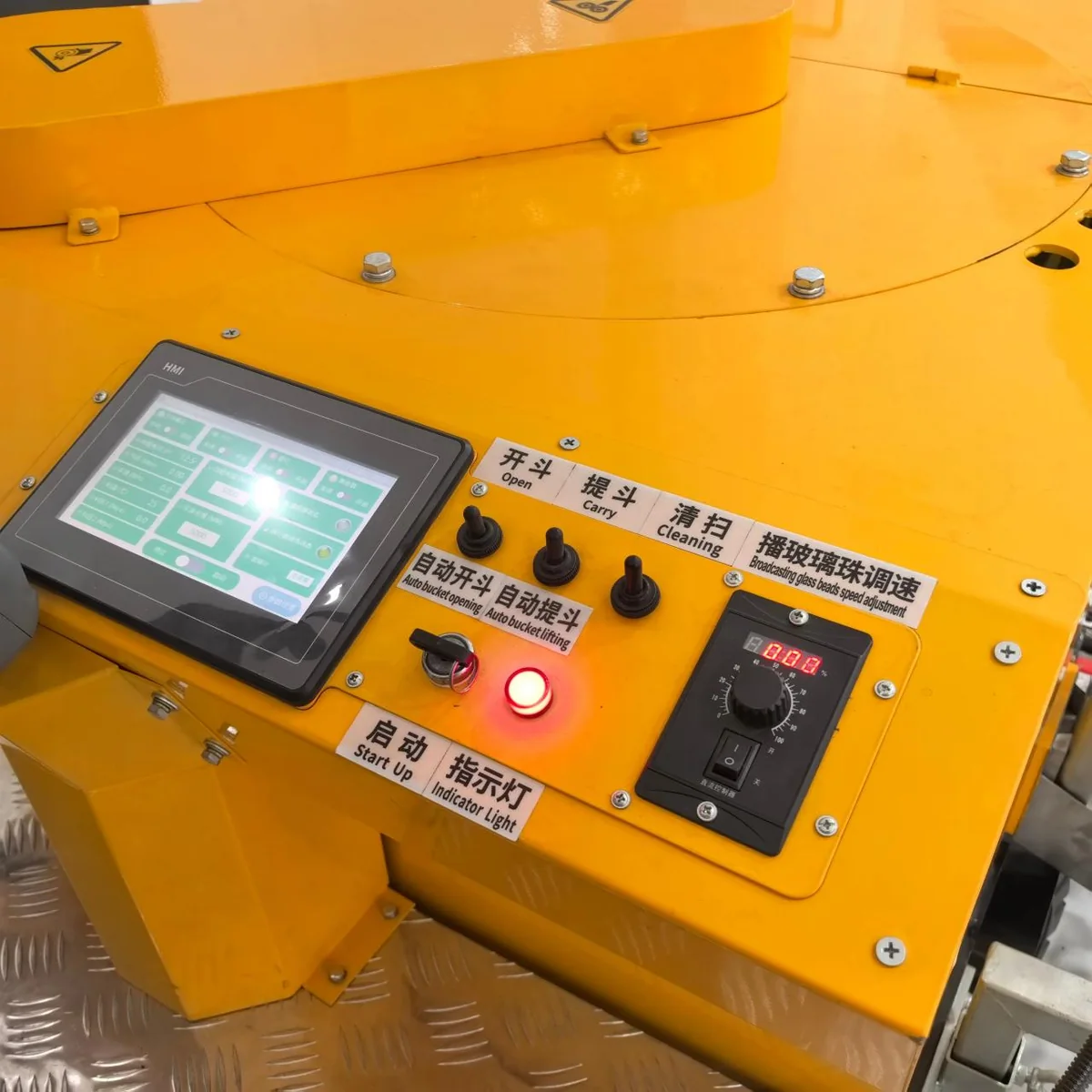
Reference Photo
Core Specifications
Feature
Description
1. Engine Power and Heating
Versatility
Powered by a reliable Honda GX390 liquefied gas engine with
13 HP, the JW-168 provides stable and efficient operation. The
heating system supports two options: Liquefied gas heating,
Diesel heating. Users can select the heating method according
to project requirements and available resources. The machine
can use a 15 kg liquefied gas tank (provided by the customer),
offering flexibility for different construction environments.
2. Intelligent Vehicle Control
System
The JW-168 Riding-type Thermoplastic Marking Machine is
equipped with: CPU computer control board, German imported

Feature
Description
Siemens control system. The intelligent control system provides:
Precise operation, Stable performance, Higher automation level,
Improved marking consistency.
3. Dual Working Modes
The JW-168 supports two marking modes: Standard solid and
dotted lines, Raised oscillating lines. This dual-function design
allows the machine to handle both conventional road markings
and safety-enhancing vibration markings.
4. Efficient Travel Drive
System
The machine adopts: Liquefied gas-powered travel system,
Hydraulic drive, Stepless speed adjustment. Advantages:
Smooth movement, Flexible speed control, Adaptation to
different construction requirements, Improved marking
efficiency.
5. High-grade Air
Compressor
Equipped with an imported air compressor that also functions
as an air pump. Parameters: Working pressure: 0.4–0.6 kg. The
stable air supply ensures reliable operation of: Glass bead
application system, Spray-related components.
6. Working Pressure and
Capacity
Optimized operating pressure: 0.4 kg. Material capacity: Paint
bucket capacity: 0.14 m³, Glass bead box: 25 kg. The large-
capacity design reduces frequent material refilling and improves
continuous working efficiency.
7. Speed and Gradient
Performance
Operating speed: 0–20 km/h. Maximum climbing ability: 30°
gradient. The machine can operate efficiently on different road
conditions, including inclined surfaces.
8. Adjustable Marking
Dimensions
The marking width can be adjusted: 5 cm, 10 cm, 15 cm, 20 cm,
30 cm, 40 cm, 45 cm. Additional adjustment: Raised marking
height: 0–10 mm. This provides flexibility for different road
marking requirements.
9. Other Features
Wheel system: Front wheels: 2 inflatable rubber wheels, Rear
wheels: 2 inflatable rubber wheels, Tire specification: 15 × 6.00-6
NHS. Safety lighting system: LED headlights, Warning lights,

Feature
Description
Turn signals, Control panel indicator lights. Additional
equipment: 2 m retractable pointer for accurate alignment.
Machine dimensions: 3 × 1.5 × 1.65 m. Machine weight: 980 kg.
Application Scenarios
Municipal roads
Parking lots
Urban streets
Residential areas
Small and medium road marking projects
Roads requiring raised vibration markings
Application Scenarios
The JW-628 Ride-On Thermoplastic Extrusion Line Striping Machine is designed for high-volume
road marking projects on highways, expressways, airports, municipal roads, industrial parks, and
large-scale infrastructure projects. It is particularly suitable for constructing thick thermoplastic
extrusion markings and complex drainage line patterns on rough pavement surfaces such as
slurry seal roads, delivering high productivity, excellent marking consistency, and superior
maneuverability.